Why Touch-Free Temperature Screening Can Be Useful in Shared Spaces
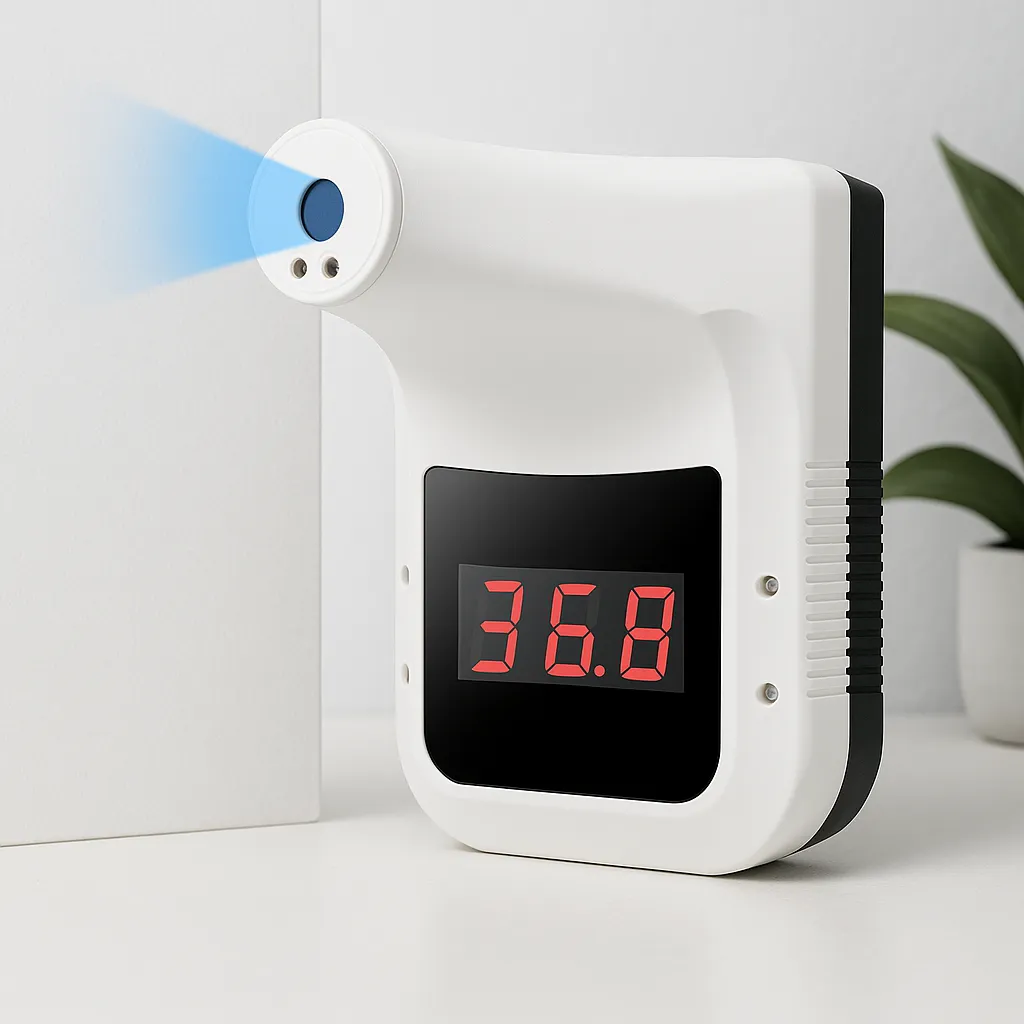
Entry points in offices, clinics, retail stores, schools, and reception areas often need systems that support smooth movement while keeping routine checks simple. A touchless wall thermometer is designed for this type of environment because it allows temperature checks without requiring physical contact between the user and the device.
That hands-free setup can be useful in places where many people pass through during the day. Instead of relying on a handheld unit for every reading, a fixed thermometer can make the process more consistent and easier to manage.
Why Contact-Free Screening Appeals to Businesses
Shared spaces often look for practical ways to handle routine entry procedures. A touch-free thermometer can help by offering a quick screening step at the entrance without requiring every visitor to touch the same device.
This can be useful in locations such as:
- Office entrances
- Retail stores
- Reception areas
- Clinics and waiting rooms
- Schools and training centers
- Warehouses and staff access points
In these settings, convenience matters as much as the device itself. A screening tool should be easy to place, easy to use, and easy to understand for both staff and visitors.
Wall-Mounted or Desktop Placement
One of the practical features of this type of thermometer is that it can fit into different layouts. Some locations may prefer a wall-mounted setup near an entrance, while others may find a desk or reception-counter arrangement more suitable.
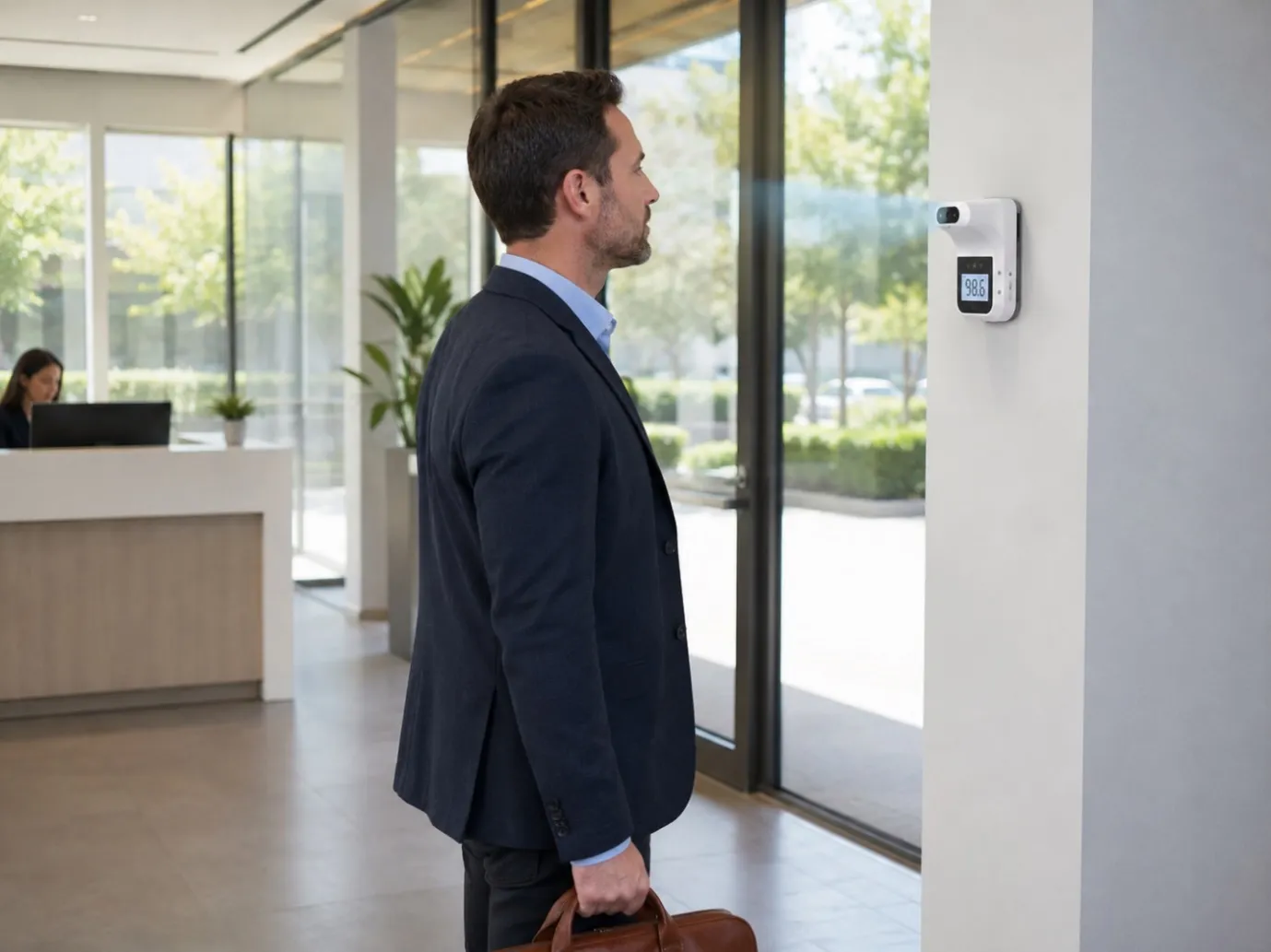
Wall-mounted placement often works well where foot traffic follows a clear path. Visitors can approach the device naturally as they enter, making the process feel more organized.
A desktop setup may be a better option for reception desks, check-in counters, or temporary screening stations. The best choice depends on available space, traffic flow, and how the area is normally used.
Speed and Ease of Use Matter
A non-contact infrared thermometer is most practical when it can provide a quick reading with minimal delay. In a busy environment, people should be able to approach the unit, pause briefly, and continue moving without creating a queue.
This is especially useful during busy opening hours, shift changes, or periods of high customer traffic. A system that is simple to understand can also reduce the need for repeated staff instructions.
Clear screen visibility is equally important. A readable digital display allows users or staff members to view the result quickly without needing to reposition the device repeatedly.
Placement Affects Performance
Even a well-designed device needs suitable placement. A thermometer should be installed at a practical height and in a spot where people can approach it comfortably.
Crowded corners, poor lighting, or awkward wall positions can make the process less smooth. It is also helpful to keep the area in front of the device unobstructed so that users can stand at the recommended distance without confusion.
If the device is being used in a public-facing environment, simple signage can make it even easier for first-time users.
Think About Workflow, Not Just the Device
Businesses often focus on the product itself, but the surrounding workflow matters just as much. A temperature screening point should fit into the normal movement of people entering the space.
Questions worth considering include:
- Where do visitors naturally stop or slow down?
- Is there enough room to approach the device easily?
- Will staff need to monitor the screening point?
- Is the display visible enough in that area?
- Does the setup work during busier periods?
Looking at these practical details can help ensure the device becomes a useful part of the entrance process rather than an awkward extra step.
Maintenance and Daily Checks
Like any frequently used equipment, a touch-free thermometer should be kept clean and checked regularly. Exterior surfaces may need wiping, and the display should remain easy to read.
If the unit is mounted in a shared environment, it is sensible to check that it remains firmly positioned and unobstructed. Power supply, settings, and general operation should also be reviewed from time to time. Regular attention helps maintain a smooth user experience and can reduce avoidable interruptions.
A Good Fit for Public-Facing Environments
This type of thermometer is especially suited to environments where quick, simple screening is more practical than repeated handheld checks. It offers a more fixed and streamlined solution for businesses or organizations that want a hands-free approach at an entrance or service point.
It is not a replacement for wider health policies or professional medical assessment. Its main value lies in convenience, accessibility, and supporting a more efficient entry routine in spaces with regular foot traffic.
Conclusion
A touch-free thermometer can be a practical addition to offices, shops, clinics, and other shared spaces where quick temperature screening may be useful. Its appeal comes from its contact-free operation, flexible installation options, and suitability for busy entry points.
When choosing how to use one, it is important to think about placement, traffic flow, visibility, and daily maintenance. With the right setup, a wall-mounted or desktop thermometer can fit naturally into the routine of a public-facing environment while keeping the process simple for both staff and visitors.

Passionate Writer, Blogger and Amazon Affiliate Expert since 2014.