The Importance of Comprehensive Floor Care for Commercial Facilities
Key Takeaways
- Proactive floor care extends the life of your floors, reducing replacement costs.
- Different flooring types demand different maintenance solutions for optimal results.
- A well-managed floor care plan boosts safety and facility appeal for all occupants.
Maintaining pristine floors in commercial environments is a direct reflection of your organization’s professionalism. In high-traffic settings, keeping floors clean and protected is not only about aesthetics but also about safeguarding both safety and asset longevity. For facilities looking to achieve consistently excellent results, it helps to understand the value of tailored floor maintenance solutions such as floor stripping and waxing, which restore shine and extend the useful life of flooring materials.
Effective floor care goes far beyond tidiness. By developing a comprehensive plan based on the unique needs of your building, you reduce risks of slips, slow down wear patterns, and ultimately save on costly repairs. Customized strategies align your maintenance efforts with the specific materials and daily conditions in each part of your facility.
Creating and following such a plan contributes enormously to the experience of employees, clients, and visitors. Well-maintained floors send a positive message, reduce environmental allergens, and enhance workplace safety. Each step, from daily cleaning to periodic professional services, is an essential investment in your organization’s image and operations.
Beyond floor finishes, other aspects of facility management, like commercial painting also play a role in maintaining a professional environment. An integrated approach to building upkeep ensures every detail is addressed for maximum appeal and performance.
Understanding Your Flooring Types
The first step in building a robust floor care plan is recognizing the variety of floors present in your facility. Each material not only looks and feels different but also reacts uniquely to traffic, cleaning agents, and environmental conditions.
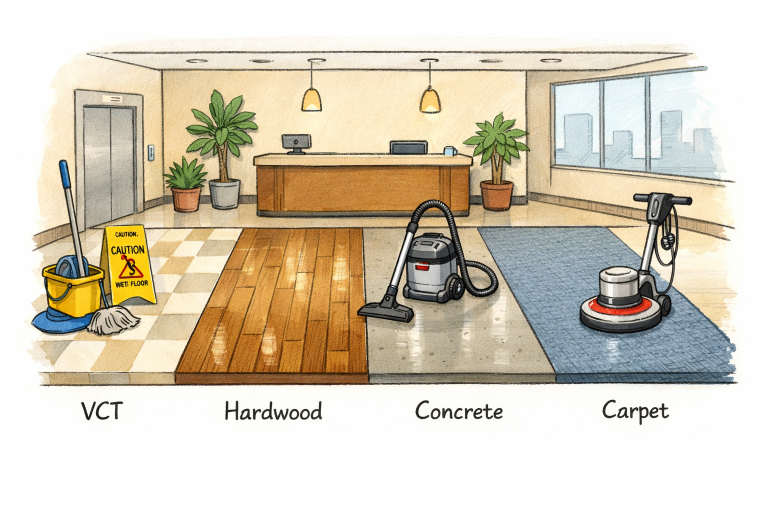
- Vinyl Composition Tile (VCT): VCT is common in schools, hospitals, and offices. This durable flooring requires regular floor stripping and waxing to maintain its gloss layer and protect it from abrasion. Without routine stripping and waxing, the material can dull or become damaged quickly.
- Hardwood: Hardwood floors offer natural beauty but demand sensitive care. Using neutral pH cleaners and keeping water to a minimum is essential. Occasionally, hardwood floors need professional refinishing to buff out scratches and renew their surface, as noted in Architectural Digest’s floor care guidelines.
- Concrete: Sealed or polished concrete is durable, yet susceptible to staining and etching without proper maintenance. Periodic sealing and polishing restore its finish and help it resist spills, which is crucial in industrial or retail settings.
- Carpet: While vacuuming removes surface debris, deep extraction is needed to eliminate ingrained dirt, dust mites, and allergens. Regular carpet care not only improves appearance but also enhances indoor air quality, as highlighted by the EPA’s guidance on indoor environments.
Developing a Maintenance Schedule
Scheduling is central to effective floor care. Each flooring type and area of your facility may require a different frequency of attention. For most buildings, this looks like:
- Daily: Removing dust and debris through sweeping or vacuuming prevents buildup and surface abrasion.
- Weekly: Mopping hard floors and deep-cleaning high-traffic carpeted areas preserves cleanliness and reduces wear.
- Monthly: Checking for and repairing chips, scratches, or other minor damage can prevent small problems from escalating.
- Annually: Scheduled professional maintenance, including tasks like restorative cleaning or floor refinishing, ensures long-term performance and appearance.
Implementing Preventive Measures
Preventing damage is as important as cleaning. Start by placing durable mats at all entrances to trap dirt and moisture. This keeps debris confined and dramatically reduces what reaches interior floors. Protective pads beneath furniture help prevent scratches, especially on hardwood and VCT. Furthermore, staff should be trained on how to quickly address spills, using the right agents for each type of flooring to avoid stains and further damage.
Training and Equipment
Using the right tools and procedures is fundamental. Equip your cleaning crew with the appropriate products for each type of floor; incorrect choices can void warranties or leave permanent marks. Comprehensive training reduces human error, cuts down on material waste, and improves outcomes. Well-trained teams are adept at spotting issues early, preventing liability concerns and surprises.
Monitoring and Adjusting the Plan
A successful floor care plan is rarely static. Perform regular assessments of your facility to spot patterns of wear and address emerging issues before they escalate. Seek feedback from maintenance personnel, and stay informed about best practices by consulting trusted industry resources. Making small, targeted adjustments over time will lead to consistently better results.
Conclusion
Investing in a tailored approach to floor care preserves the beauty and safety of your commercial space, elevates your brand image, and saves on repair costs. Whether your facility employs VCT, hardwood, carpet, or concrete, a strategic plan that combines effective cleaning, preventative measures, and skilled staff will keep your floors shining and your workplace welcoming for years to come.